

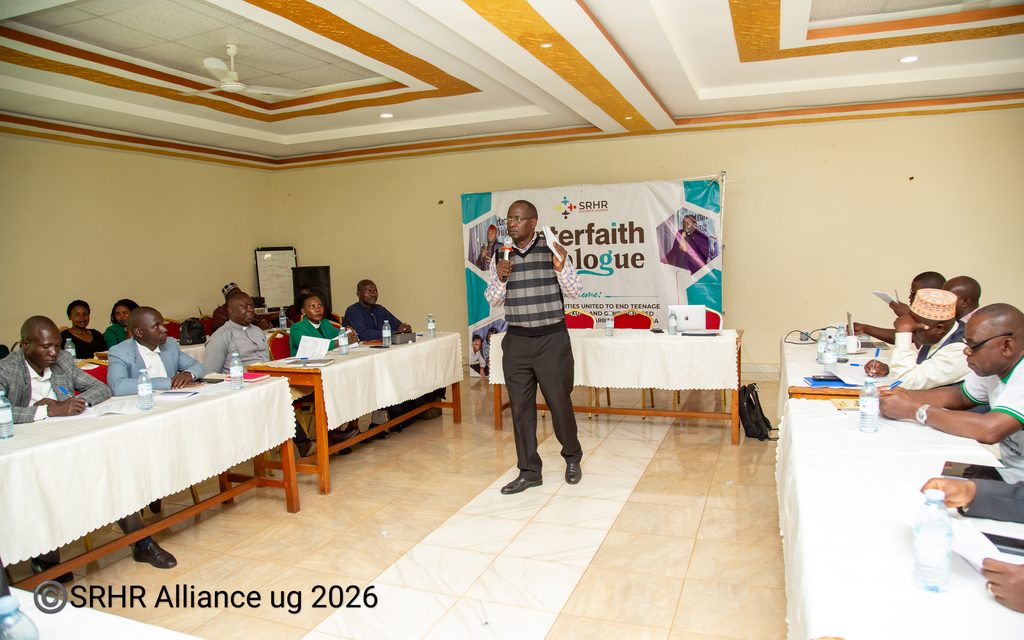
On 22 October 2026, religious leaders, district officials, political leaders, civil society actors and young people from across Busoga met at Zeu Resort Hotel in Mayuge. They came for the 2026 Regional Interfaith Dialogue, themed Faith Communities United to End Teenage Pregnancy, SGBV and Child Marriage in Uganda. The SRHR Alliance Uganda convened it for the sixth year, aiming to turn conversation into accountable action. Participants spoke of girls considered ready for marriage once they begin menstruating, and of pregnant girls pushed to marry the men responsible. They also raised defilement by relatives and child labour on sugarcane farms.
Speaking for the Country Director, Ms Margaret Nanyombi said these issues threaten young people’s dignity, safety, education and future. Ms Esther Labu Chelangat, our Youth Advisory Committee president, warned that young people no longer find refuge in faith institutions that stay silent on child marriage. Mr Charles Serwanja of the Inter-Religious Council of Uganda blamed poor parenting and family breakdown, rather than poverty. Dr Justine Nabwire of the Ministry of Health showed that Busoga is above the national average on teenage pregnancy and violence. On abortion, the region stands at 24.6 percent, compared with 19.4 percent nationally. She challenged each leader to act on two of eight faith-based actions within three months, including refusing to officiate child marriages.
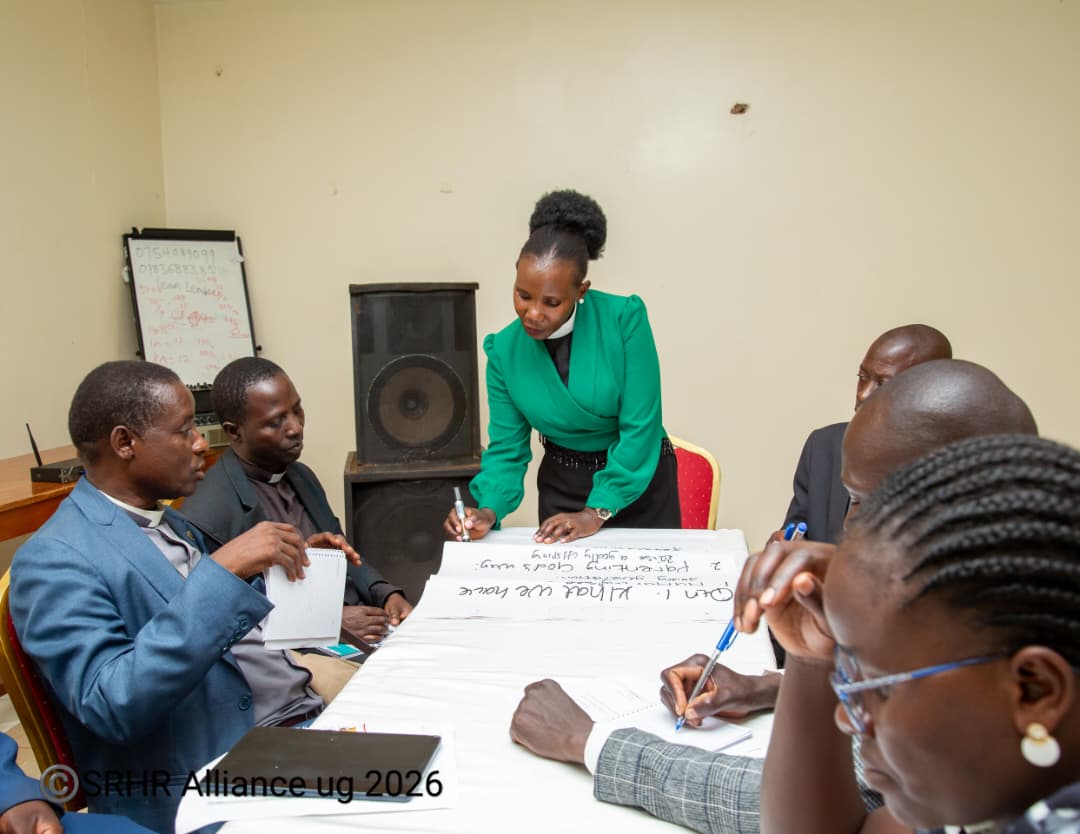
Grouped by faith, participants chose priority actions to take to the Inter-Religious Council of Uganda. Muslim leaders will not officiate marriage for girls under 18. The Church of Uganda will train chaplains and school administrators on SRHR. Catholics will make home visits to keep children in school. Seventh-day Adventists will protect survivors rather than condemn them. The Born-Again Fraternity will run parenting seminars, and the Orthodox Church will offer skilling for girls and women. The senior representative of each faith pledged to deliver these actions. Mayuge’s health department committed to cutting teenage pregnancy in the district to 15 percent.
The Alliance envisions “a society where ALL young people can make informed SRHR choices.” In Busoga, many of those choices are shaped in churches and mosques long before a young person reaches a clinic. The Alliance’s mission is “to strengthen SRHR partnerships and networks that promote young people’s SRHR.” That mission was on show in a room that brought together faith, government, civil society and youth. The dialogue built leaders’ capacity with current evidence and amplified young people’s voices. It also carried district commitments to a national faith platform.
Busoga now has a sub-regional action and commitment framework that names priority actions and responsible actors. The real test begins in Sunday services, Friday prayers and home visits. The young people who asked to be heard will be watching.