Day three of Alliance Week 2026 has been both quite busy and interesting, as it also marks International Youth Day. Today, our partner teams spread across schools, health centers, and communities in Namayingo District. Learners from Primary One through Senior Five took part in sessions on personal hygiene, menstrual health, puberty, and healthy relationships, expectant mothers and young people were engaged at two health facilities, and an outreach team conducted condom demonstrations and STI awareness door-to-door in Buyinja Subcounty, highlighting the poverty that sits behind so many of the district’s SRHR challenges.
Male involvement in Menstrual Health
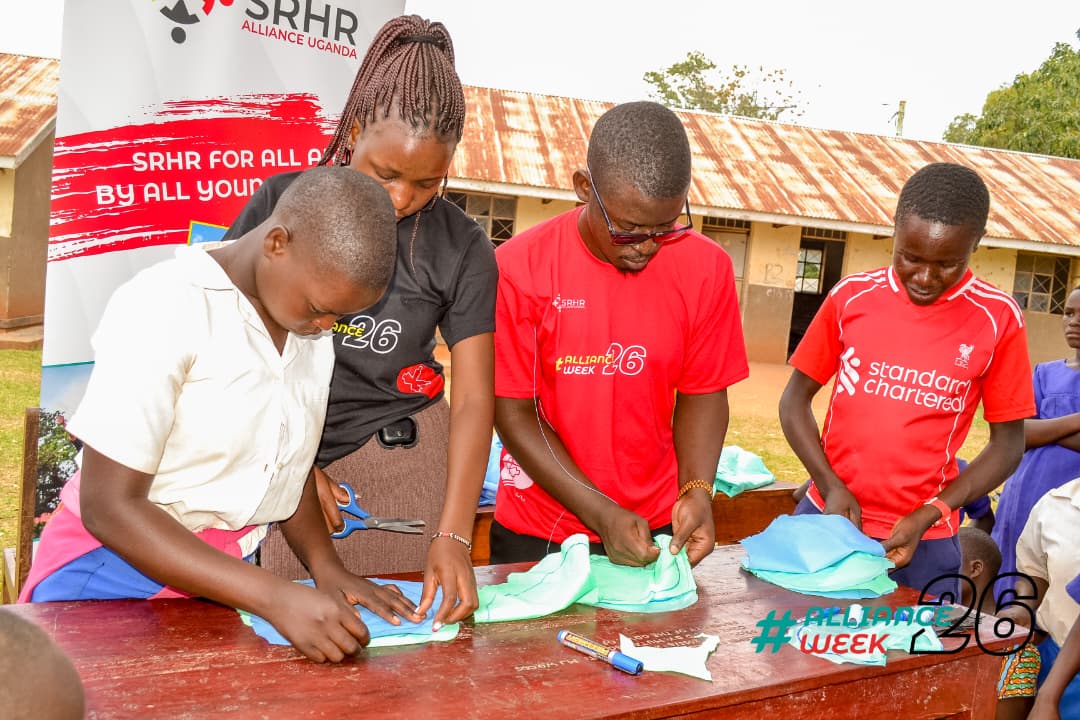
Across Kifuyo Primary School, Lubongo Primary School, Bumeru Primary School, Bulombi Church of Uganda Primary School, Mutumba Seed Secondary School, and Mulombi Primary School, boys were deliberately engaged alongside girls in sessions on menstrual health, puberty, sexual and reproductive health, hygiene, teenage pregnancy, HIV and STI prevention, healthy relationships, and child protection. Boys participated in practical reusable sanitary pad-making sessions, challenged myths and stigma around menstruation, and discussed how they can support girls and create safer, more inclusive school environments. At Bulombi, more than 200 pupils from Primary One to Seven participated in age-appropriate sessions, while at Mutumba Seed Secondary School, boys took part in discussions on teenage pregnancy, school dropout, meaningful friendships, and menstrual hygiene, with Senior Two students gaining practical skills in reusable pad-making.
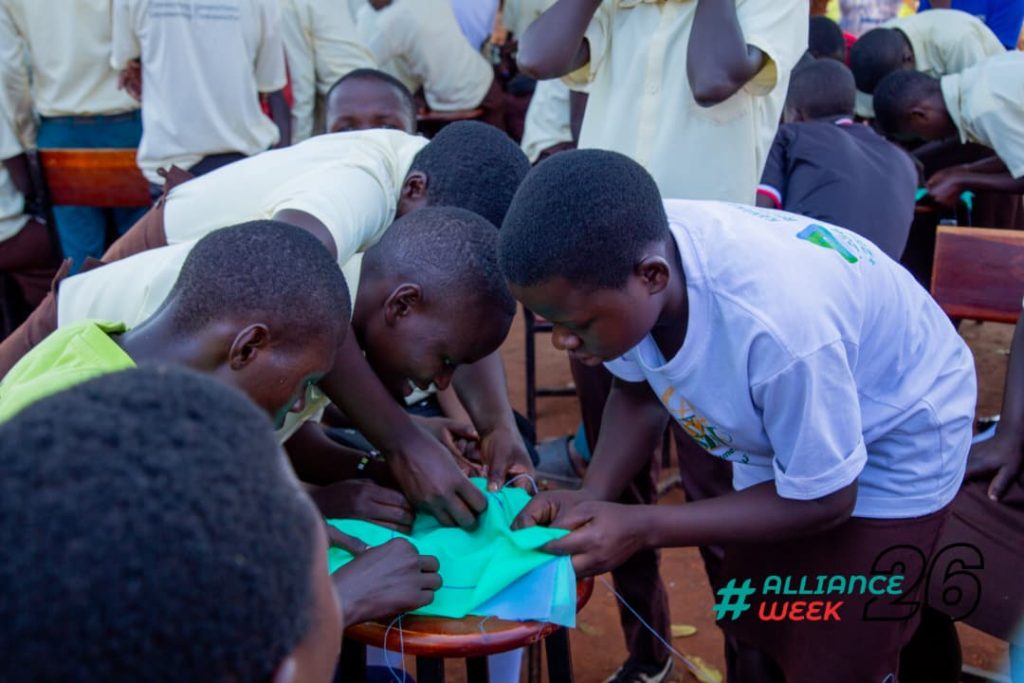
At Mulombi Primary School, age-tailored peer learning also created space for boys to understand puberty, menstrual health and the physical, emotional and social changes experienced during adolescence. Across all six schools, the involvement of boys helped shift menstrual health and adolescent wellbeing from being viewed as issues affecting girls alone to shared responsibilities requiring the understanding and support of both sexes. Discussions also surfaced wider challenges, including poverty, exploitation, transactional sex, inadequate parental guidance and pressure for girls to marry due to bride price. By engaging boys in these conversations, the activities promoted informed, supportive peer relationships and encouraged young males to play a positive role in reducing stigma, preventing teenage pregnancy and helping girls remain safe and in school.
While at Mulombi Health Center III in Bukooli South Health Sub-District, our partners encouraged greater male participation in reproductive health, urged young mothers to embrace family planning, and promoted HIV testing. In the surrounding community, teams demonstrated correct use of both female and male condoms as a family planning method and distributed condoms directly to residents.
Self Care at the Health Centers
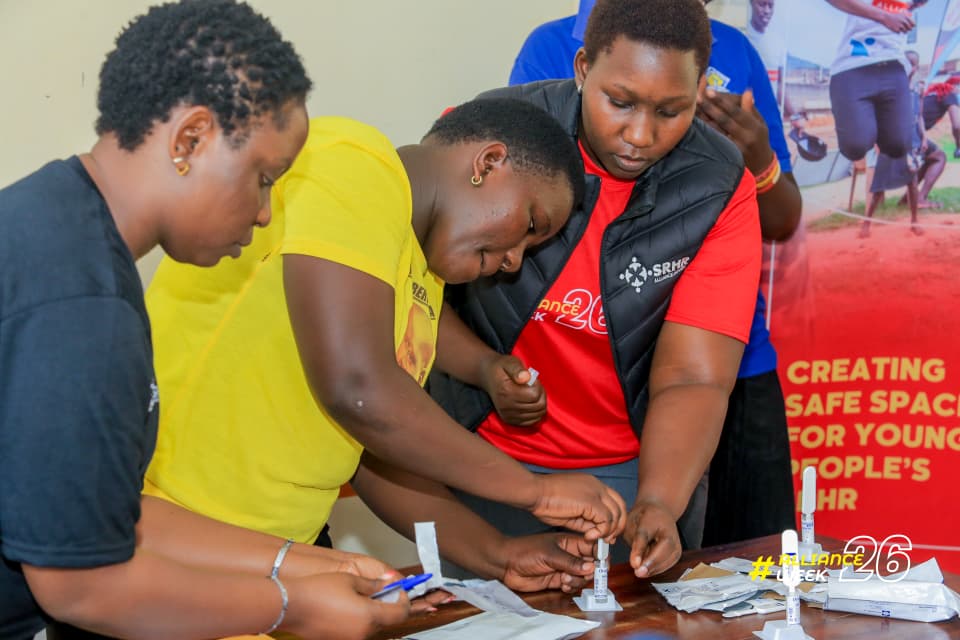
At the Youth Corner, young people received a practical demonstration of how to use the OraQuick HIV Self-Test kit, from collecting the oral fluid sample and conducting the test correctly to reading the results within the recommended time. The session emphasized privacy, informed choice, and the need for confirmatory testing after a reactive result. Young people also discussed the challenges of teenage pregnancy and the experiences of young mothers, took part in an HIV prevention presentation, and explored bodily autonomy at Syanyunja Health Center III.